
Therapy that carries into real life.
Individual OT treatment shaped around your child’s goals, routines, and participation.
Treatment shaped around your child
Occupational therapy can support the skills and routines that help children take part in everyday life. Support is shaped around the child, the family, and the context in which a challenge is happening.

Treatment areas
We can support a range of participation, regulation, motor, and daily living goals. Explore the areas that feel most relevant to your child.
You do not need to choose the perfect treatment area before contacting us. We can talk through what you are noticing and what would help next.

What support may include
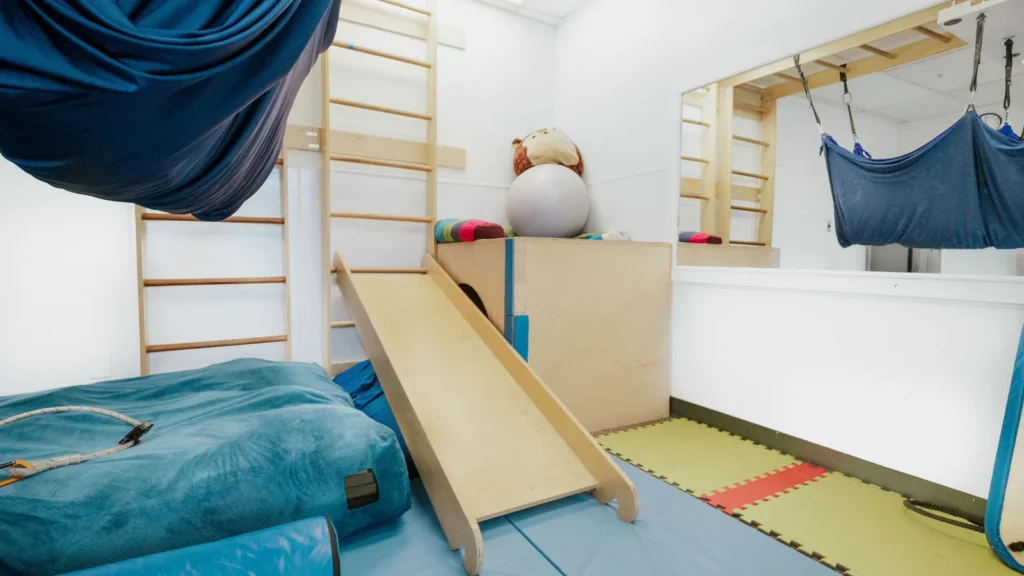
Sessions may involve play, movement, practice, conversation, and problem-solving. We keep asking how an idea could help beyond the clinic.
How therapy goals are set
We begin with what you are noticing, what feels difficult, and what matters most to your family. Together, we identify practical goals and review them as priorities change.
-
Start with your questions We learn what is happening in daily life and what you want to understand or change.
-
Choose meaningful goals We connect support to the activities your child wants or needs to do.
-
Review and adjust together Goals can change as your child develops or routines change.

Family involvement
Parents and caregivers may join sessions, observe, practise strategies, or focus on planning for routines at home. The format depends on what is most useful for the child and family.
Support in everyday settings
Therapy can consider home, school, community, and online settings when context matters. With family consent, we can think with the people involved about routines, environments, and practical supports.
What happens next
You do not need to know which treatment area fits before contacting us. We can talk through whether therapy, an assessment, consultation, or another next step makes sense.
-
Start with your questions
-
Choose a meaningful next step
-
Involve the right people with your consent
-
Review together as priorities change
We can start with your questions and build from there. The next step will depend on your child, your goals, and the setting where support is needed.
Related support
These areas often overlap, and support can be shaped around more than one part of everyday life.
Start with a conversation
You do not need to know the right treatment area. Tell us what is happening, what you have already tried, and what you hope will change.
- Questions are welcome. Contact WonderKids if you are unsure which support fits.