
Support for big feelings and hard-to-manage moments
Emotions can connect with body signals, sensory needs, routines, communication, and demands.

Understanding what happens before the reaction
We look at triggers, body cues, sensory load, communication, and task demands.
What you may be noticing
Reactions that feel bigger than the moment, slow recovery after change, or worry around school, sleep, or routines.
-
Reactions that feel bigger than the moment A child may need support when emotions rise quickly or feel hard to communicate.
-
Recovering after change Disappointment or change may take longer to move through.
-
Worry around routines School, sleep, communication, sensory load, and task demands can all contribute.
How OT may help
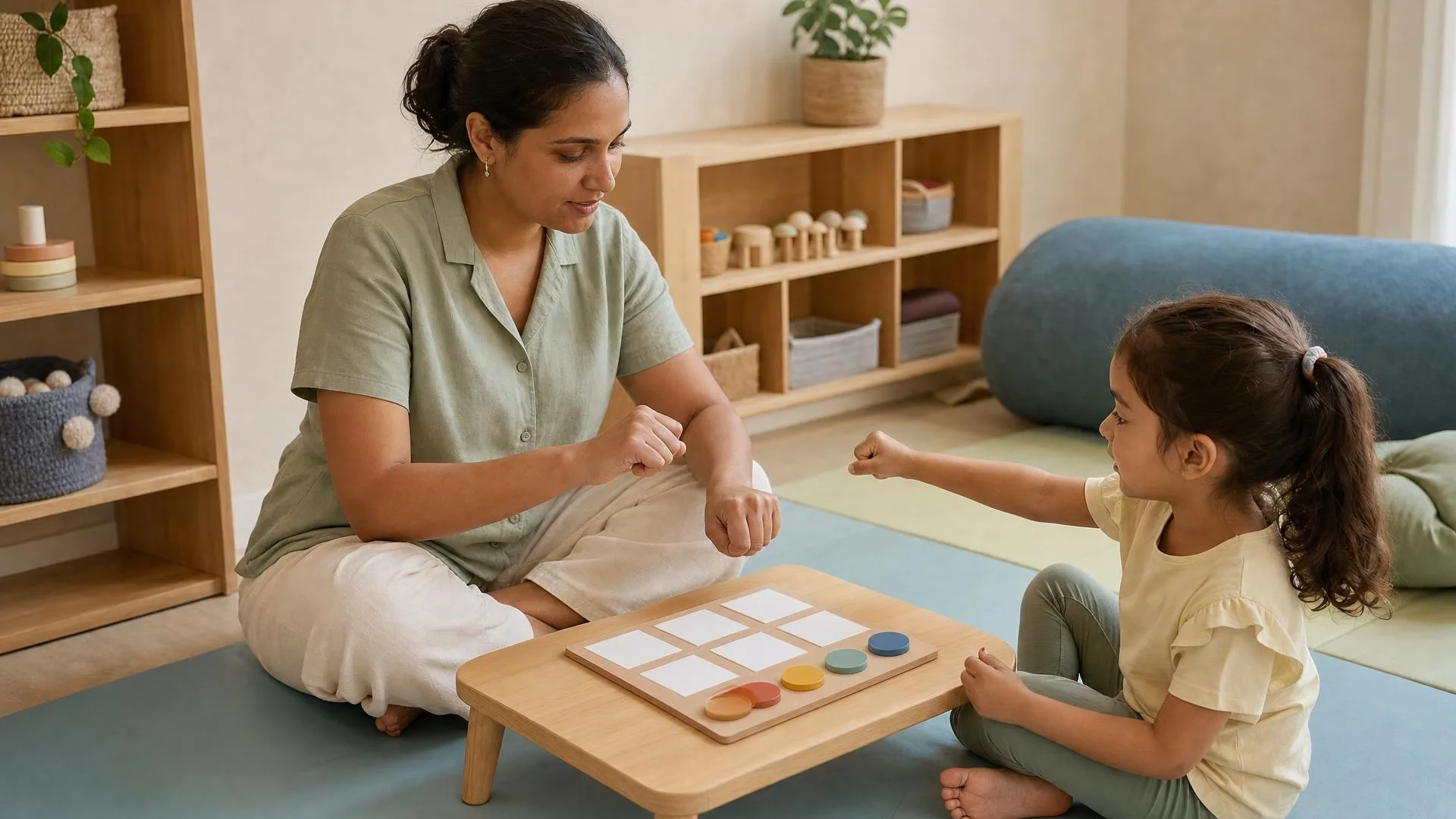
OT may help children notice early signals, practise regulation tools, and reduce unnecessary strain in routines.
Support that fits everyday life
Depending on the child and family priorities, support may include:
Play
Using play and exploration to notice preferences, needs, and participation patterns.
Movement
Exploring movement to support participation, regulation, and confidence.
Visual tools
Using visual supports to make expectations, choices, and next steps clearer.
Co-regulation
Working with a trusted adult to notice signals, recover, and return to participation.
Routine-based problem-solving
Looking at recurring routines to find practical adjustments and next steps.
The role of parents and caregivers
Shared language and realistic strategies can help with recurring situations. Involvement should fit the family.
-
Shared language
-
Early signals
-
Regulation tools
-
Recurring situations
-
Routine problem-solving

OT at WonderKids has been foundational to his growing physical and emotional confidence.
Parent of a WonderKids clientRelated support
-
Sensory regulation Considering sensory experiences, body cues, and environments that affect participation.
-
Executive functioning Supporting planning, starting, shifting, and following through with everyday tasks.
-
Social play Supporting meaningful play, connection, and participation.
-
Daily independence Supporting participation in self-care and everyday routines.
Let’s discuss the best fit
We can discuss whether OT fits and when another provider may be useful.